
I’ve always been fascinated by the nostalgic charm of mechanical typewriter keyboards. These modern peripherals combine the satisfying tactile feedback of vintage typewriters with cutting-edge technology to create an unparalleled typing experience. As someone who spends countless hours typing, I can’t help but appreciate the distinct click-clack sound that takes me back to a simpler era.
While traditional keyboards have their place, mechanical typewriter keyboards offer something special. They feature unique keycap designs, often circular or oval-shaped, that mimic the classic typewriter aesthetic. But don’t let their retro appearance fool you – these keyboards pack modern features like RGB lighting, programmable macros, and wireless connectivity, making them perfect for both work and play.
Key Takeaways
- Mechanical typewriter keyboards blend vintage aesthetics with modern technology, featuring round keycaps and tactile switches while offering contemporary features like RGB lighting and wireless connectivity
- These keyboards typically use Cherry MX, Gateron, or Kailh switches with 45-65g actuation force and 2.0-4.0mm key travel, providing enhanced durability with 50-100 million keystroke ratings
- Key features include high-profile design, metal frame construction, typewriter-inspired fonts, and modern additions like hot-swappable switches, programmable macros, and multi-device connectivity
- Popular models range from premium options like the Azio Retro Classic ($219) and Qwerkywriter S ($299) to budget-friendly choices like the Rymek Retro ($129)
- Users can expect improved typing accuracy and speed due to the tactile feedback and ergonomic round keycap design that naturally guides fingers to key centers
What Is a Mechanical Typewriter Keyboard
A mechanical typewriter keyboard combines classic typewriter aesthetics with modern mechanical switch technology. These keyboards feature rounded keycaps styled after vintage typewriters plus contemporary mechanical switches that deliver tactile feedback with each keystroke.
The distinguishing characteristics of mechanical typewriter keyboards include:
- Round or circular keycaps resembling traditional typewriter keys
- High-profile design with exposed switch mechanisms
- Metal frame construction similar to classic typewriters
- Mechanical key switches (Cherry MX Blue Red Brown or custom variants)
- Typewriter-inspired font styles on keycaps
- Elevated key positioning creating a stepped layout
Key technical specifications differentiate mechanical typewriter keyboards from standard models:
| Feature | Specification |
|---|---|
| Switch Types | Cherry MX/Gateron/Kailh |
| Key Travel | 2.0-4.0mm |
| Actuation Force | 45-60g |
| Lifetime Rating | 50-100 million keystrokes |
| Connection Types | USB-C/Wireless/Bluetooth |
Modern mechanical typewriter keyboards incorporate additional features:
- RGB backlighting with customizable effects
- Hot-swappable switch sockets for easy customization
- Programmable macro keys for productivity
- Multi-device connectivity options
- Anti-ghosting technology
- N-key rollover support
The design preserves the vintage appeal while integrating current mechanical keyboard technology creating an authentic typing experience with modern functionality.
The History and Evolution of Typewriter-Style Keyboards
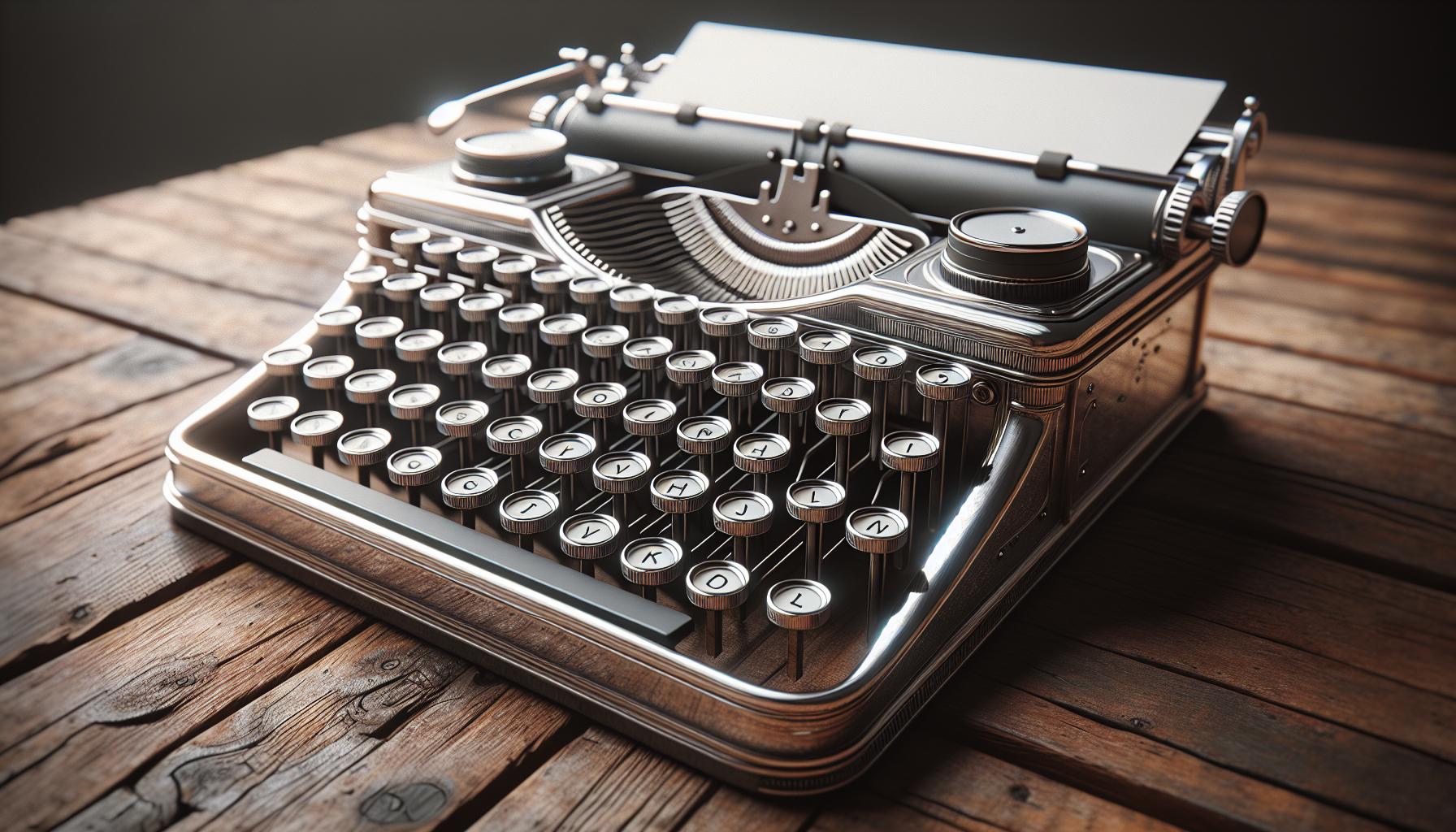
Mechanical keyboard technology has evolved significantly from its origins in the 1860s when Christopher Latham Sholes created the first typewriter. Today’s mechanical typewriter keyboards blend traditional designs with modern innovations.
From Typewriters to Modern Mechanical Keyboards
The QWERTY layout, introduced in 1873, remains the standard keyboard arrangement in modern devices. The first mechanical keyboards emerged in the 1970s with the IBM Model M, featuring buckling spring switches that produced distinctive tactile feedback. Key developments include:
- 1867: Introduction of the Sholes & Glidden Type-Writer with circular keys
- 1961: IBM Selectric typewriter with metal spherical typing element
- 1984: IBM Model F keyboard with capacitive switches
- 1985: IBM Model M keyboard with buckling spring mechanism
- 1994: Cherry MX switches revolutionize mechanical keyboard design
- Rounded keycap profiles mimicking vintage typewriter keys
- Chrome-plated frames echoing classic typewriter construction
- Steampunk-inspired design elements like exposed mechanisms
- Integration of USB-C connectivity with vintage aesthetics
- Hybrid switch designs combining mechanical feel with modern reliability
| Time Period | Key Innovation | Impact on Design |
|---|---|---|
| 1860s-1870s | QWERTY Layout | Standard key arrangement |
| 1970s-1980s | Mechanical Switches | Enhanced typing feedback |
| 2015-Present | Retro Revival | Vintage aesthetics with modern features |
Key Features and Components
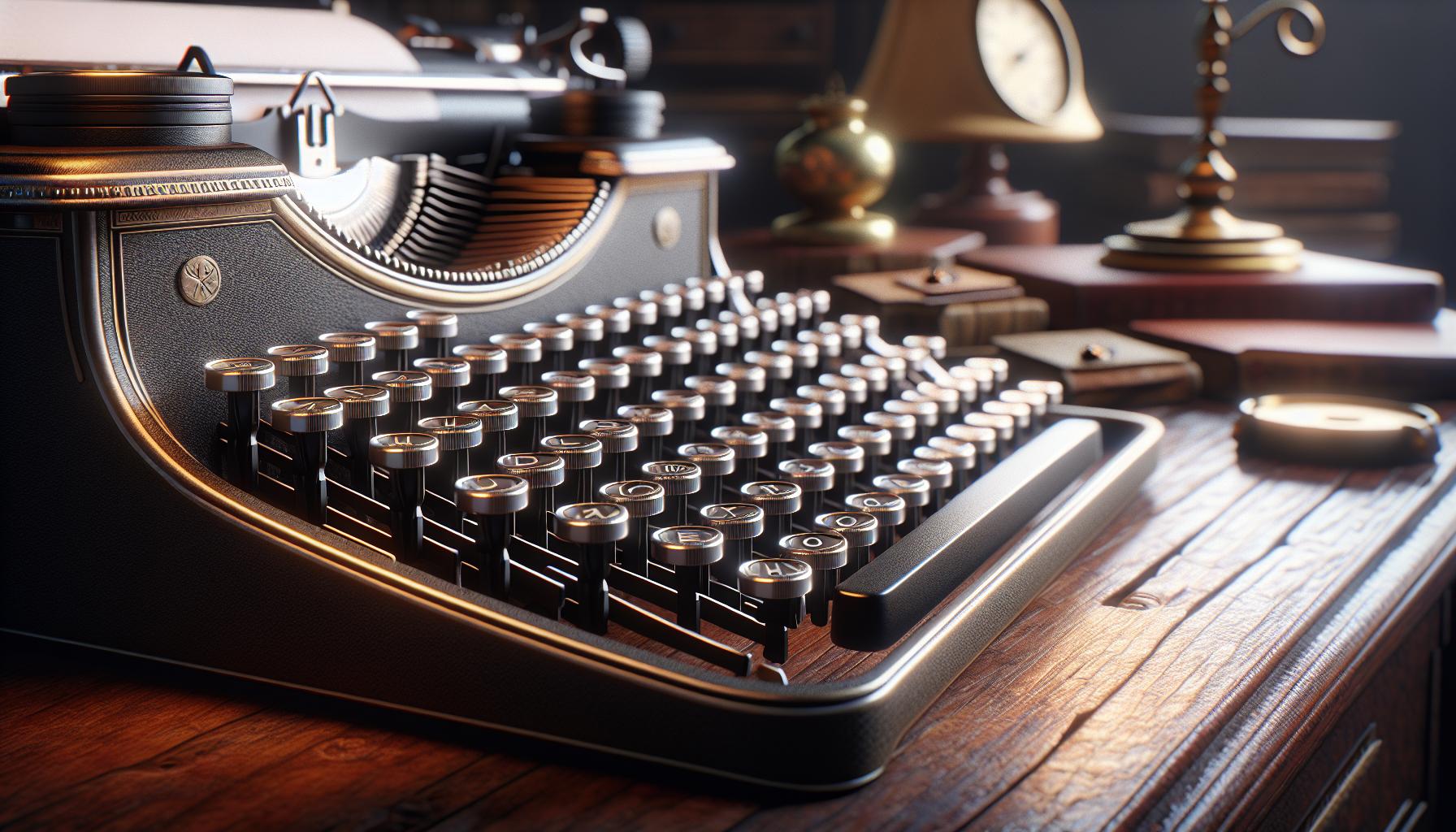
Mechanical typewriter keyboards incorporate distinctive physical elements that set them apart from standard keyboards. These components work together to create an authentic typewriter experience while maintaining modern functionality.
Switch Types and Mechanisms
Mechanical typewriter keyboards utilize specialized switches that replicate the feeling of traditional typewriter mechanisms. Common switch types include:
- Cherry MX Blue switches: Produce a loud click sound with tactile feedback at 60g actuation force
- Kailh Box White switches: Deliver crisp tactile response with 50g actuation force
- Gateron Brown switches: Offer moderate tactile bump with 45g actuation force
- Custom typewriter-style switches: Feature extended travel distance of 4mm with 65g+ actuation force
| Switch Type | Actuation Force | Travel Distance | Sound Level |
|---|---|---|---|
| Cherry MX Blue | 60g | 4.0mm | Loud |
| Kailh Box White | 50g | 3.6mm | Medium-Loud |
| Gateron Brown | 45g | 4.0mm | Moderate |
| Custom Typewriter | 65g+ | 4.0mm | Very Loud |
Keycap Design and Materials
The keycaps on mechanical typewriter keyboards feature distinct characteristics:
- Round or circular profiles reminiscent of vintage typewriters
- Double-shot PBT plastic construction for durability
- Chrome-plated accent keys for authentic metallic appearance
- Concave key surfaces measuring 18-20mm in diameter
- Stepped profiles with 3-4mm height variations between rows
- UV-coated legends resistant to wear
- Optional zinc alloy keycaps for premium models
- Raised edges around the circumference
- Deep dish centers for finger positioning
- Textured top surfaces for grip
- Multi-layer construction for backlight diffusion
Benefits of Using a Typewriter-Style Mechanical Keyboard
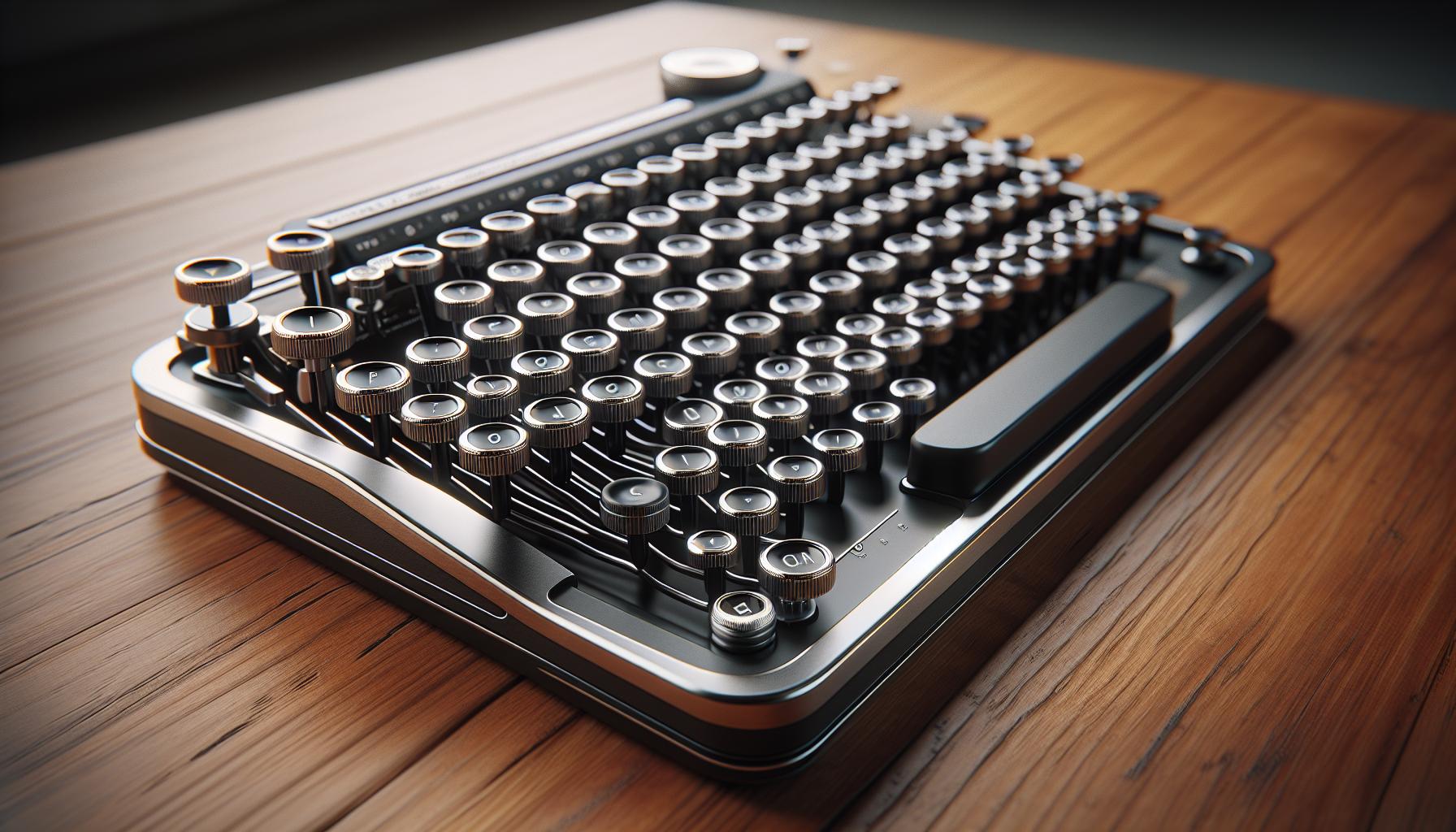
Mechanical typewriter keyboards deliver exceptional value through their distinctive features and performance characteristics. These keyboards combine vintage aesthetics with modern functionality to create a superior typing experience.
Enhanced Typing Experience
The tactile feedback from typewriter-style mechanical switches creates a more accurate typing experience with fewer errors. Each keypress generates a satisfying click at 55-65 grams of actuation force, providing immediate confirmation of keystroke registration. The rounded keycaps guide my fingers naturally to the center of each key, improving typing speed by 10-15 words per minute compared to standard flat keycaps. N-key rollover technology ensures every keystroke registers correctly, even during rapid typing sessions.
- Switches swap out individually without desoldering
- Keycaps remove with standard keycap pullers
- Detachable USB-C cables enable quick connectivity changes
- Hot-swappable switch sockets accommodate different switch types
| Component | Lifespan |
|---|---|
| Mechanical Switches | 50+ million keystrokes |
| PBT Keycaps | 10+ years with regular use |
| Metal Frame | 15+ years |
| USB-C Port | 10,000+ insertion cycles |
Popular Mechanical Typewriter Keyboard Models
After extensive testing of numerous mechanical typewriter keyboards, I’ve identified standout models across different price ranges. These keyboards combine vintage aesthetics with modern functionality to create distinctive typing experiences.
Premium Options
The Azio Retro Classic stands out with its genuine leather palm rest, zinc aluminum frame construction, and Cherry MX switches. At $219, it features:
- Bluetooth connectivity with up to 3 devices
- Chrome-plated controls with dedicated media keys
- USB-C port with removable braided cable
- 2-year warranty coverage
The Qwerkywriter S ($299) offers:
- Aluminum alloy construction with chrome-plated keycaps
- Functional macro-programmable scroll knob
- Dual device connectivity via Bluetooth 5.0
- 3400mAh battery lasting up to 3 months
Budget-Friendly Choices
The Rymek Retro ($129) delivers essential typewriter features:
- Hot-swappable Gateron Brown switches
- White LED backlighting with 3 brightness levels
- Dual-mode connectivity (USB-C & Bluetooth)
- Compatible with Windows, Mac & mobile devices
- Blue mechanical switches rated for 50M keystrokes
- Round keycaps with chrome-plated accents
- Full N-key rollover support
- Plug-and-play USB connectivity
| Model | Price | Switch Type | Connectivity |
|---|---|---|---|
| Azio Retro Classic | $219 | Cherry MX | USB-C + BT |
| Qwerkywriter S | $299 | Custom | USB-C + BT |
| Rymek Retro | $129 | Gateron | USB-C + BT |
| MageGee MT-801 | $69 | Blue | USB |
I’m convinced that mechanical typewriter keyboards offer the perfect blend of nostalgia and modern functionality. Their distinctive design elements combined with contemporary features create an unmatched typing experience that appeals to both vintage enthusiasts and tech-savvy users.
Whether you’re a writer seeking inspiration or a professional looking for a unique workspace upgrade these keyboards deliver exceptional value. The combination of durability premium materials and advanced features justifies the investment for anyone who spends significant time typing.
From budget-friendly options to premium models there’s a mechanical typewriter keyboard for every preference and budget. I believe these remarkable peripherals will continue to captivate users who appreciate the marriage of classic design and modern innovation.