


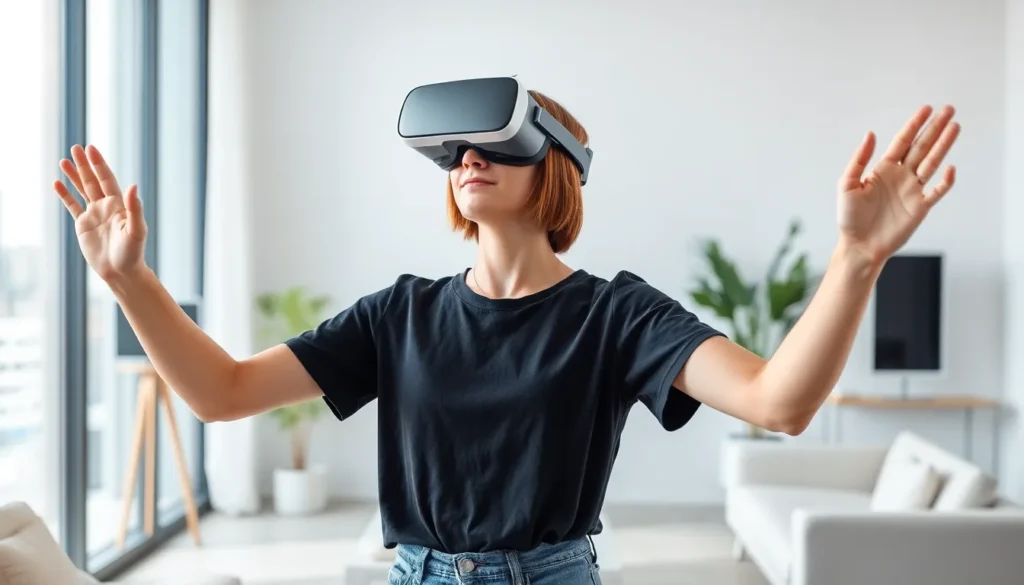
Head-mounted displays (HMDs) are transforming the way people experience digital content. These innovative devices immerse users in virtual environments, offering a unique blend of entertainment, education, and productivity. From gaming to training simulations, HMDs are pushing the boundaries of what’s possible in visual technology.
As the demand for immersive experiences grows, so does the technology behind HMDs. With advancements in resolution, field of view, and tracking capabilities, these devices are becoming more accessible and user-friendly. Whether for casual users or industry professionals, head-mounted displays are paving the way for a new era of interaction with digital worlds.
Overview of Head-Mounted Displays
Head-mounted displays (HMDs) consist of a set of display devices worn on the head. They deliver immersive virtual experiences by placing screens directly in front of the user’s eyes. HMDs feature various types, including virtual reality (VR) headsets, augmented reality (AR) glasses, and mixed reality (MR) devices. Each type offers unique functionalities catering to different applications in entertainment, training, and collaboration.
HMDs incorporate advanced technologies that enhance user experience. Modern HMDs utilize high-resolution displays, often exceeding 2000 x 2000 pixels per eye. This resolution ensures clear visuals, reducing the screen-door effect common in earlier devices. Additionally, HMDs provide wider field-of-view angles, ranging from 90 to 110 degrees, enabling a more immersive view of virtual environments.
Tracking capabilities represent another significant advancement in HMD technology. Most devices employ both inside-out and outside-in tracking systems. Inside-out tracking uses embedded sensors to track the user’s position and orientation, while outside-in tracking relies on external cameras or sensors placed within the environment. Accurate tracking minimizes motion sickness and enhances the overall user experience.
HMDs have gained traction across various industries, facilitating applications in gaming, healthcare, education, and architecture. In gaming, popular systems such as Oculus Rift and HTC Vive provide engaging gameplay experiences. In healthcare, HMDs assist in surgical training and patient therapy, proving effective in medical education and rehabilitation practices.
As HMD technology continues evolving, increased accessibility and device affordability attract a broader audience. Current trends foresee integration with smartphone technologies, streamlining user experiences and expanding capabilities. By supporting cross-platform compatibility, HMDs are becoming essential tools for digital content interactions, driving the demand for innovative applications across diverse fields.
Types of Head-Mounted Displays
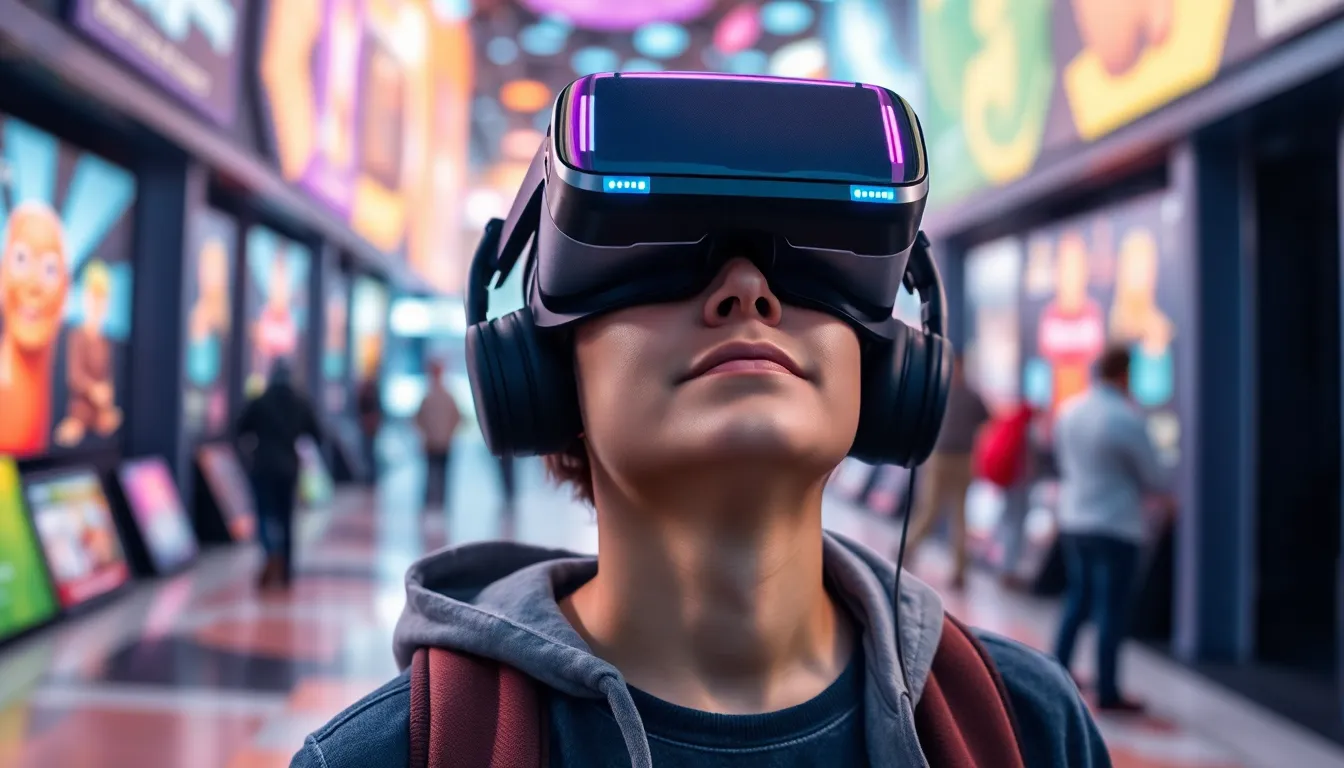
Head-mounted displays (HMDs) come in three primary types, each serving unique purposes. These include virtual reality, augmented reality, and mixed reality headsets.
Virtual Reality Headsets
Virtual reality headsets create fully immersive digital environments that replace the user’s surroundings. Devices such as the Oculus Quest 2 and Valve Index utilize high-resolution displays, often exceeding 2000 x 2000 pixels per eye. They feature motion tracking systems that follow head movements, augmenting the sense of presence within the virtual space. Users interact through handheld controllers, enabling activities ranging from gaming to virtual simulations.
Augmented Reality Headsets
Augmented reality headsets overlay digital information onto the real world, enhancing user perception. Devices like Microsoft’s HoloLens and Magic Leap One combine high-definition visuals with environmental awareness. These headsets utilize sensors to recognize physical spaces, allowing users to interact with both digital and real-world objects seamlessly. Applications range from design visualization to training and remote assistance.
Mixed Reality Headsets
Mixed reality headsets blend elements of both virtual and augmented reality, enabling interactive experiences within a real-world context. Devices such as the HP Reverb G2 and Varjo XR-3 offer advanced spatial awareness and high-fidelity graphics. Users can manipulate virtual objects that exist within their physical environment, benefiting fields like architecture and engineering. This convergence of realities allows for innovative applications in collaboration and immersive storytelling.
Key Features of Head-Mounted Displays
Head-mounted displays (HMDs) showcase several features that enhance immersion and usability. Key characteristics include advanced display technology, robust tracking systems, and user-centered comfort and ergonomics.
Display Technology
Display technology in HMDs significantly impacts user experience. High-resolution screens, often exceeding 2000 x 2000 pixels per eye, provide sharp visuals. Wide field-of-view angles, typically between 90 to 110 degrees, create a more immersive environment. OLED and LCD panels are common, with OLED offering deeper blacks and richer colors. Displays also incorporate fast refresh rates, reducing motion blur and enhancing clarity during fast movements, making activities like gaming more enjoyable.
Tracking Systems
Tracking systems play a critical role in HMD functionality. Modern HMDs utilize both inside-out and outside-in tracking methods to provide accurate spatial awareness. Inside-out systems use built-in cameras and sensors to track movements relative to the environment. Outside-in systems rely on external sensors set in the room. This duality minimizes latency and significantly reduces motion sickness, resulting in smoother interactions. Additionally, advanced tracking often supports room-scale experiences and gesture recognition, enhancing user engagement.
Comfort and Ergonomics
Comfort and ergonomics are essential for extended use of HMDs. Lightweight designs reduce fatigue, while adjustable straps and padding accommodate various head sizes. Users experience prolonged usage without discomfort due to balanced weight distribution. Some HMDs feature interchangeable face cushions, allowing customization for fit and hygiene. Ventilation systems further enhance comfort by reducing heat buildup, ensuring a pleasant experience during long sessions.
Applications of Head-Mounted Displays
Head-mounted displays (HMDs) facilitate a wide range of applications, transforming how users engage with digital content across various industries.
Gaming and Entertainment
HMDs revolutionize gaming and entertainment by delivering immersive, interactive experiences. Major platforms like Oculus Quest and PlayStation VR provide users with realistic 3D environments. Game developers increasingly create titles specifically for VR, enhancing player engagement. Research indicates that 75% of gamers prefer VR experiences over traditional formats. Beyond gaming, HMDs enable cinematic experiences, transporting users into narrative-rich environments for films and immersive storytelling.
Education and Training
HMDs significantly advance education and training methodologies. Virtual classrooms and simulated environments allow students to engage with complex subjects interactively. Educational institutions utilize AR and VR for training in fields like aviation and engineering, where learners practice skills in controlled settings. Studies show that students using HMDs achieve 30% higher retention rates than traditional learning methods. Furthermore, professional training programs benefit from realistic simulations, streamlining the certification process for various disciplines.
Healthcare and Therapy
In healthcare, HMDs play a vital role in surgical training, enabling doctors to practice procedures in immersive environments. Medical professionals use augmented reality to overlay vital information during surgeries, enhancing precision. HMDs also support patient therapy, particularly in treating phobias and PTSD, offering controlled exposure to triggering environments. Evidence suggests that patients undergoing VR therapy report a 60% decrease in anxiety levels during treatments, indicating significant therapeutic potential.
Head-mounted displays are reshaping the way users interact with digital content. Their ability to deliver immersive experiences across various sectors is undeniable. As technology continues to advance, these devices will only become more integral to everyday life.
With increasing accessibility and affordability, a wider audience is expected to embrace HMDs, enhancing entertainment, education, and professional training. The future promises even more innovative applications as industries explore the potential of virtual, augmented, and mixed reality.
HMDs are not just a trend; they’re paving the way for a new digital frontier.